When intimacy becomes exhausting: why parasocial bonds feel like rest
It All Begins Here
Parasocial relationships are often reduced to a symptom of celebrity culture: asymmetrical attachments whereby intimacy is felt without reciprocity. Bonds are formed with people who are unaware of our existence. Society’s attachment to fictional characters, celebrities and online figures is less about obsession than absence. These relationships are pervasive not because we are delusional, but because something fundamental is dissipating in everyday social life. In a world where relationships increasingly feel like labour, a one-way connection offers a rare form of rest.
In an era marked by precarious work, constant mobility and instability, long-term, low-stakes relationships have become increasingly rare. Communities are transient, neighbours change, jobs are temporary and collective identity has weakened. Identity is increasingly constructed through affiliation with individuals rather than groups. The infrastructure that once made relationships effortless has been stripped away. The ‘third places’ that once anchored social life — clubs, community centres, churches, and local cafés — have faded away, become unaffordable, or lost their relevance. What remains demands constant effort and time to sustain. Coordination is required across clashing schedules with housemates or neighbours you rarely see, and friendships are maintained through planned catch-ups because there is no natural rhythm to fall into amid the instability of postmodernity. Parasocial relationships, by contrast, offer continuity on your own terms, without obligation: a familiar voice, face, or narrative that endures as everything else shifts.
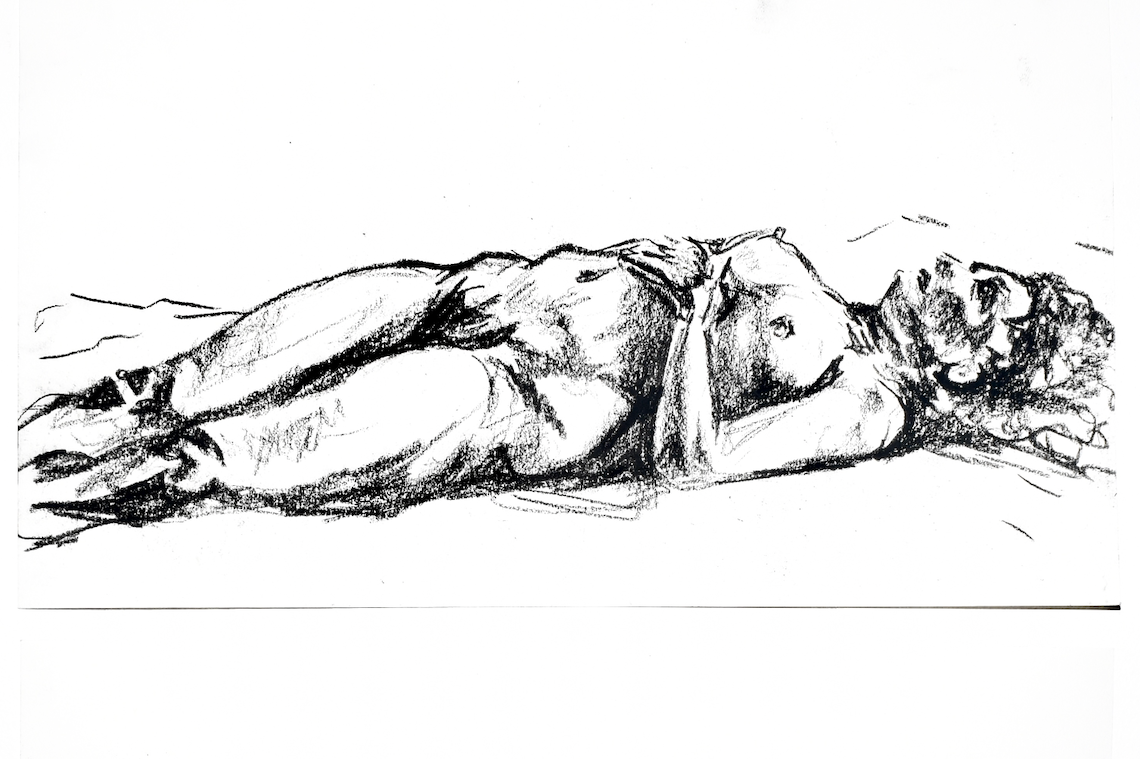
Life drawing, charcoal (A), By GHK, Dec, 2026
These bonds ask little of us, nothing beyond one’s own autonomy. No replies, apologies, availability, negotiation or emotional performance. They offer rest rather than risk, filling the gap left by exhaustion with a favourite influencer or Micheal Scott from The Office (2005-2013). These strange psychological bonds offer accompaniment without the fear of rejection. Hyper-independence has made dependency taboo while making interdependence harder than ever to maintain. There is a quiet shame in admitting you need others but cannot afford the upkeep. Parasocial intimacy provides a way to need without asking. It delivers a reassuring sense of connection that softens our isolation.
Moreover, cultural life is increasingly mediated, rather than shared. Parasocial relationships become the most accessible form of connection when time, energy, or stability are scarce. There is no guilt when you disappear for weeks, no expectation that you will drop everything when required, no risk of disappointment. The beauty of real connection lies partly in these demands; however, in a burnt-out society, this is the only form of intimacy that does not add to the workload. These relationships reflect a broader shift from participation to spectatorship. Increasingly, people watch lives from the outside rather than living alongside others, and observation replaces participation. This is far from moral failure, but rather a structural condition. Belonging becomes something consumed rather than practised as celebrities and characters take on symbolic weight, filling the vacuum left behind by declining collective identities.
Yet these bonds reveal a muted optimism. People remain longing for familiarity, continuity, and shared meaning. Parasocial relationships do not replace real connection but signal the difficulty of sustaining it today. Low-maintenance intimacy should not feel like the only sustainable option. Its appeal points beyond the individual, towards a society that has quietly eroded the conditions for reciprocal closeness.
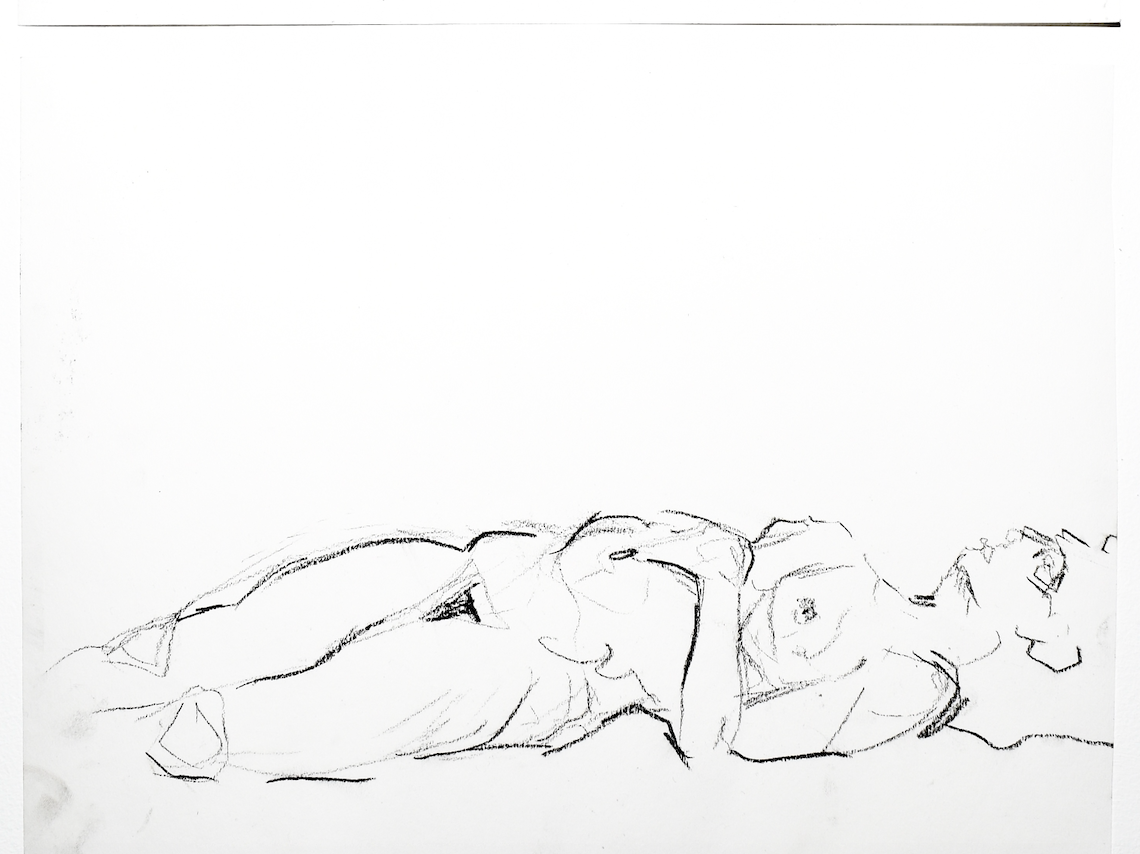
Life drawing, charcoal (B), By GHK, Dec, 2026

Dissent is on sale! : How Counter-Cultural Style Forgot Its Politics
It All Begins Here
Counter-cultural fashion emerges from those who oppose belonging to the dominant society. It functions as a political language that portrays dissent, belonging, and moral orientation without the need to speak it. The clothing of radicals, reformers and cultural outsiders has never been merely decorative, yet crystallises into recognisable silhouettes. The irony lies in capitalism's relentless cooptation. The more clearly an outfit speaks, the more likely it is to be translated by markets, media, and memory into something more digestible for wider society and hence sellable. Visual dissent becomes absorbed and sold to the very society a counterculture once resisted. From the Bohemians of nineteenth-century Paris dishevelled garments to the psychedelic pieces worn by the hippies of the 1960s and 70s, counter-cultural dress demonstrates a familiar trajectory where ideology simmers down to style, style detaches from context, and protest becomes a profitable product. The significance of these nonconformist outfits mattered because they were ideological before they were aesthetic. The story here lies in capitalism’s ability to erase the memory of struggles, rebellion and origins to repackage it into aesthetic novelty.
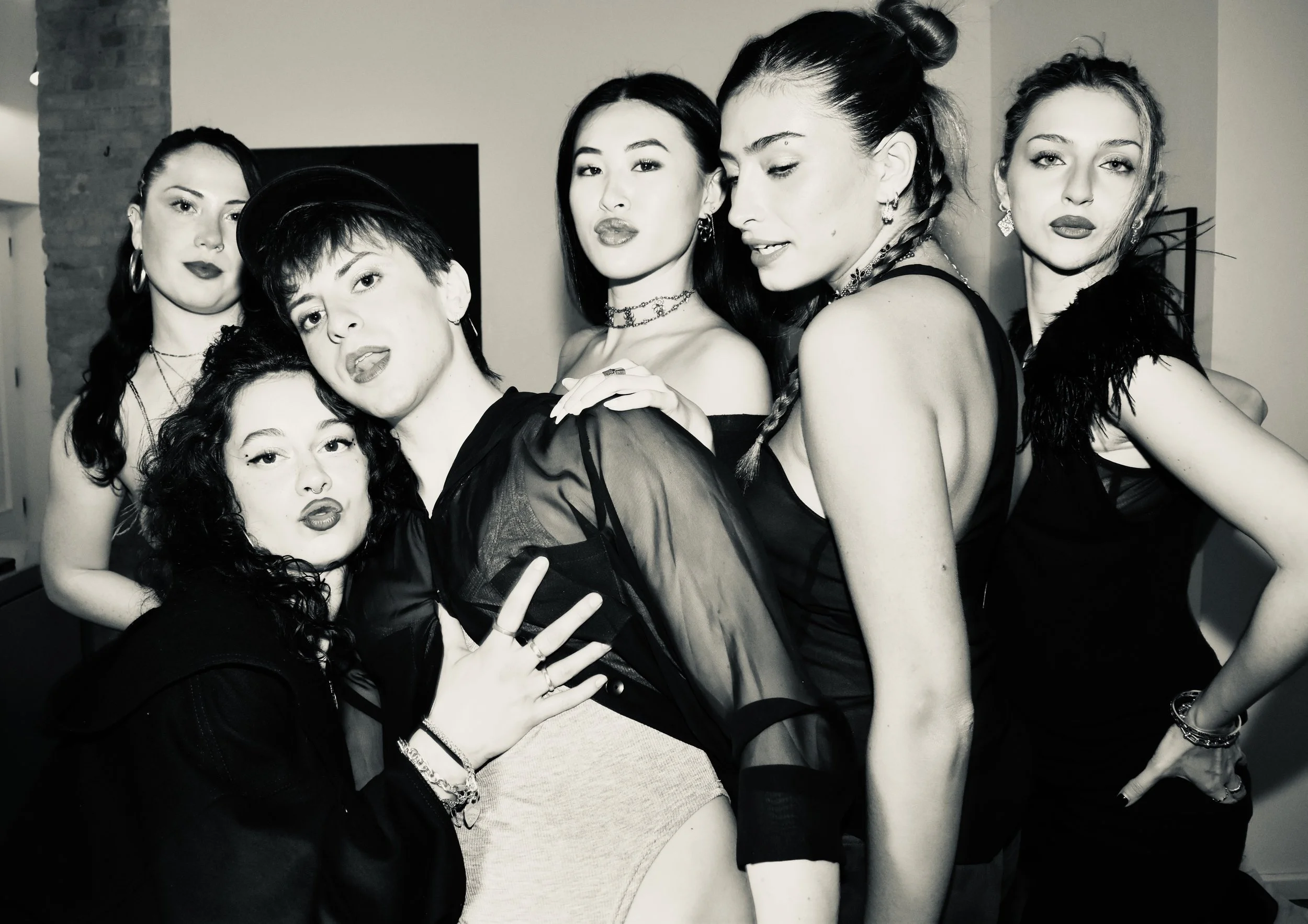
Berlin, Feb 2026
The Bohemians of the early to mid-nineteenth century in Paris did not dress to be admired. A counterculture of writers, artists and intellectuals sought to withdraw from mainstream society and endure poverty in pursuit of a life dedicated to art and freedom. One had to appear bohemian to be understood as one, and hence the ideological outfit became legible. Their clothing was influenced by the romantics and medievals that came before them, and with a desire for loose silhouettes, distant from the common rigid corsets, in addition to velvet fabrics and innovative layering. Frayed and worn-out second-hand garments were the basis of this style, with colour being implemented to ultimately express artistic liberty and individualism. They were eccentric and theatrical, economically precarious and social outcasts. The bohemian style was rooted in inverting bourgeois codes, and essentially, what the middle class read as a failed individual, the Bohemians interpreted as the ultimate winner. Bourgeois values of respectability, accumulation and stability were rejected, and their clothing was a full embodiment of that dissent. The bohemian desired to unsettle the non-bohemian. Fast-forward to today, and “bohemian” survives, but empty of its historical antagonism. Contemporary “boho” style, incorporating earth tones, loose flowing fabrics and simulations of hand craftsmanship bear minimal relation to its origins in anti-bourgeois critique and economic marginality. What began as an explicit rejection of capitalist discipline now circulates freely within it, its oppositional force became neutralised through representation. The starving artist, no longer a threat, is now a packaged commodity, and bohemianism has been dehistoricised in true capitalist fashion.
If bohemianism demonstrates slow absorption of radical dress, the hippie movement of the 1960s reveals how quickly capitalism learned commodification, stripping movements of their Anti-establishment ideology. Emerging within an era of heightened political upheaval defined by the Vietnam War, Civil Rights Movement, and Women’s Liberation, to name a few. Hippie fashion of recycled fabrics, ethnic and non-Western references and loose-fitting clothing portrayed a rejection of militarism, Western dominance and consumer capitalism. Long hair resisted bodily discipline and conscription, whilst handmade clothing challenged mass production. The body became a site of protest, signalling one was opting out of systems embedded with violence and control. Anti-imperialist, anti-capitalist, and anti-authoritarian were the foundations. However, despite this rise of the counterculture, there was a simultaneous crucial shift in capitalist logic where difference itself and individuality became profitable. Following the 1967 Summer of Love, the hippie style was adopted into mainstream fashion. Blatant material critiques of consumer culture rapidly became absorbed, sanitised and repackaged. Bell-bottoms, flowing clothing and tie-dye were stripped of their political urgency and sold as playful lifestyle choices. Dissent had been rebranded as self-expression before it could meaningfully threaten dominant structures. The result is a contemporary landscape in which resistance survives as an aesthetic gesture, safely contained within the marketplace that once stood as its primary critique. There is no need for capitalism to silence dissent when it can simply sell it, and the hippie counterculture lends itself to an unambiguous example of subversion reabsorbed.
Ideological outfits made abstract politics visible and enabled solidarity to emerge. Both these countercultures highlight the loss of memory in clothing. Anti-capitalist slogans are worn to the Met Gala, and revolutionary aesthetics circulate without revolutionary demands. The irony is difficult to miss : dissent may now be safest when worn. This does not mean resistance and political dress is impossible, however, it suggests a fragility. Subcultural style is always vulnerable to recuperation, either through commodification or ideological reframing. Today, the cycle is almost self-aware. Recognition invites replication, and replication invites profit. The historical understanding and political force of certain garments or styles dissipate, and today bohemia is Sienna Miller, and hippie is the theme of a festival. Despite this, contemporary practices such as up-cycling, community-based fashion production and forms of slow fashion attempt to resist full absorption by prioritising process over product. As long as alienation and inequality persist, people will continue to dress against the grain. Fashion remains a space where resistance can be rehearsed through practice rather than possession, a reminder that dissent cannot be bought - it must be enacted.