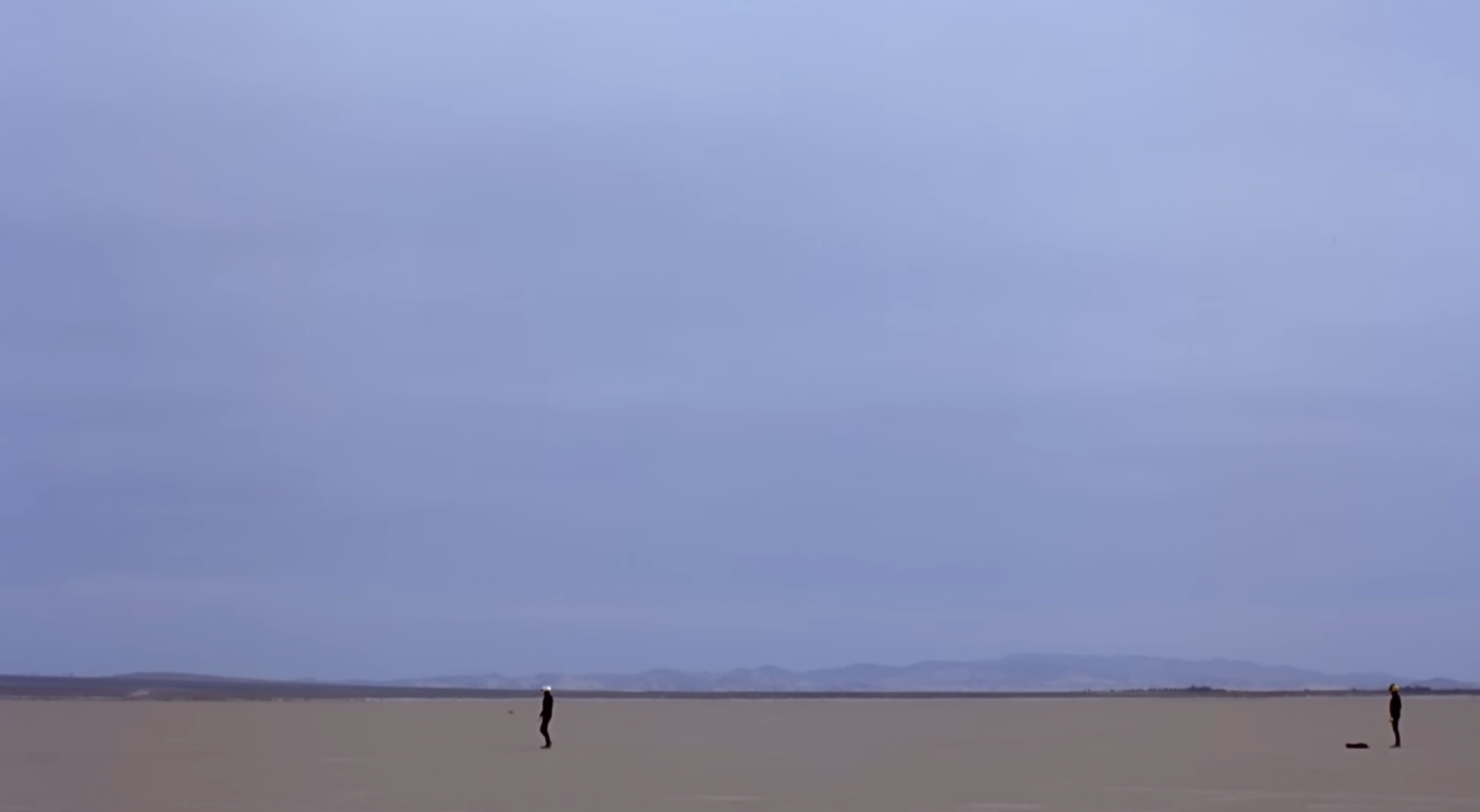
Campaign system: daft punk - final tour reactivation
A speculative campaign system imagining a final reactivation tour for Daft Punk. This is a conceptual exercise exploring how cultural memory, identity, and absence could be structured as a coordinated campaign across music, fashion, and media environments.
-
Daft Punk’s presence in culture has always been defined as much by absence as by output. Between 1993 and 2021, the project established a controlled relationship to visibility: minimal public exposure, tightly managed releases, and an identity system built on anonymity rather than personality.
Since their formal dissolution in 2021, their cultural position has shifted again. Their archive has remained active — continuously resurfacing through algorithmic circulation, editorial nostalgia, and platform-led rediscovery of early electronic music aesthetics. Absence itself becomes a form of ongoing presence.
-
The reactivation of Daft Punk as a live entity cannot function as a conventional return. Their cultural value is structurally tied to disappearance, controlled communication, and myth maintenance.
The central problem is therefore:
How do you construct a return that preserves the logic of absence that made the project culturally significant in the first place?
-
Daft Punk do not return as a conventional touring act. They reappear as a controlled cultural system — activated once, structured as an event, and designed to conclude permanently.
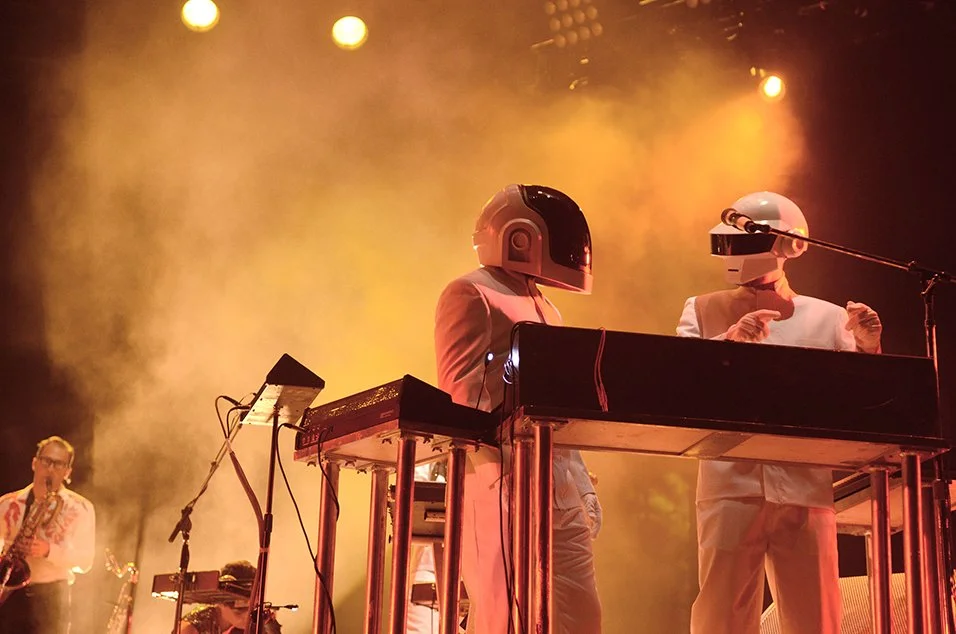
creative system
Identity
The helmet functions as a fixed interface rather than a performative costume. No re-humanisation occurs. No expansion of persona or narrative clarity is introduced.
Visual Language
The visual system is grounded in archival distortion and controlled reduction. Existing imagery is reprocessed, reinforcing continuity not reinvention.
Communication Tone
Communication is minimal, fragmented, and structurally ambiguous. The campaign avoids explanatory framing, relying instead on controlled signals distributed across time.
Audience Role
The audience functions as both participant and distributor. Meaning is constructed externally through circulation, documentation, and reinterpretation.
ROLLOUT ARCHITECTURE
Phase 1 — Signal Resurfacing
Archive material begins to circulate at increased frequency across platforms without official framing or confirmation.
Phase 2 — Controlled Ambiguity
A limited visual fragment enters circulation, generating speculation without resolution.
Phase 3 — Formal Reactivation
A final tour is announced with minimal narrative framing, positioned explicitly as closure rather than continuation.
Phase 4 — Live System
A restricted series of global performances structured around controlled access, limited documentation conditions, and spatially minimal staging environments.
Phase 5 — Closure Event
The final performance is treated as an archival endpoint not a climax, after which the system returns to silence.
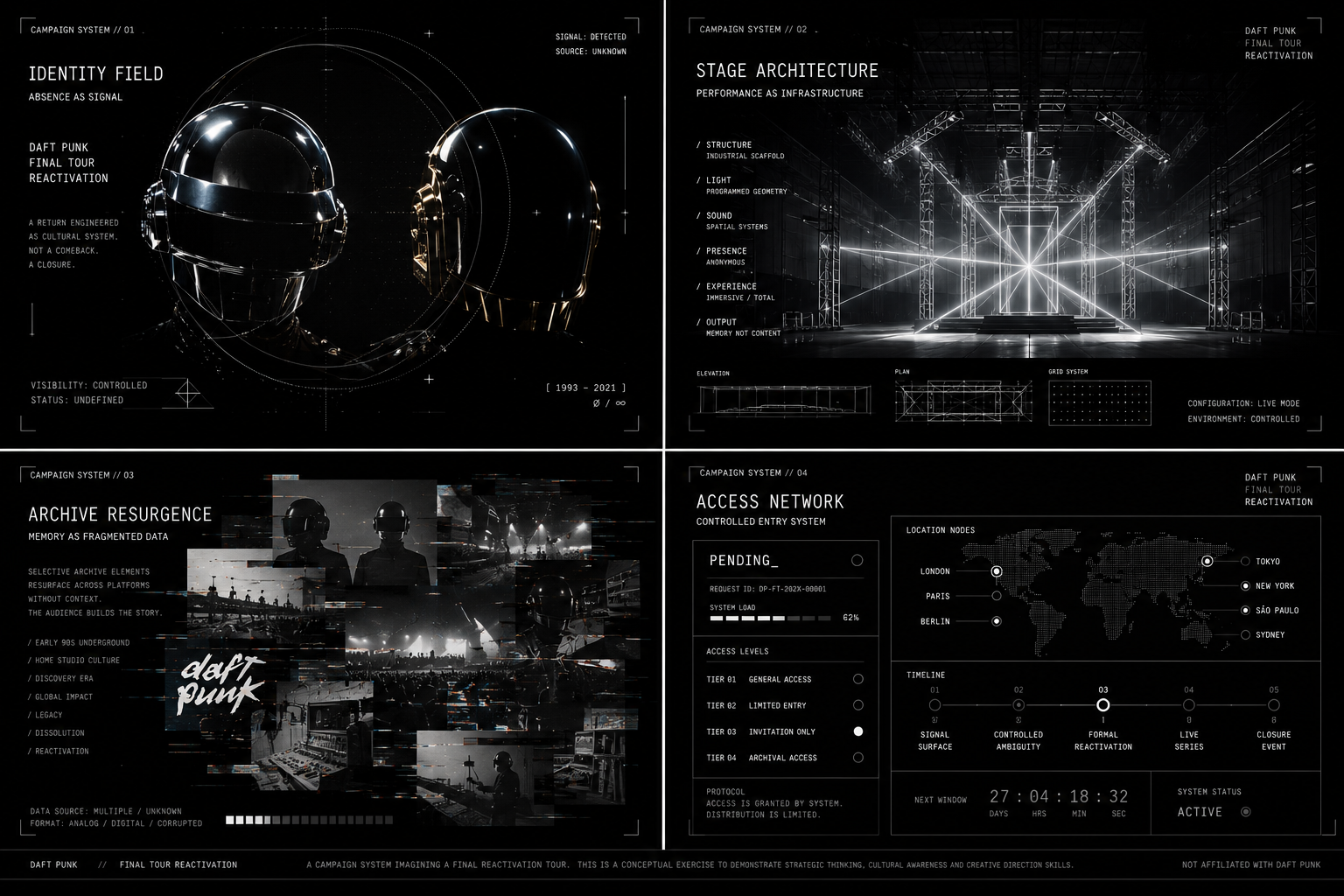
Generated through Claude AI inputs
EXPERIENTIAL DESIGN
The live environment is structured around abstraction. The performance prioritises spatial audio, light architecture, and system visibility over performer presence. Documentation is permitted but not centralised, allowing fragmented circulation to shape post-event meaning.
Post - Tour system
Following the final performance, no further activation occurs. The archive is stabilised and not expanded. Any post-event material is released selectively to preserve the integrity of closure as a cultural condition.
outcome
This system reframes finality as a designed cultural condition. It repositions absence and closure as structured elements within contemporary media circulation.