WHEN INTIMACY BECOMES EXHAUSTING: WHY PARASOCIAL BONDS FEEL LIKE REST
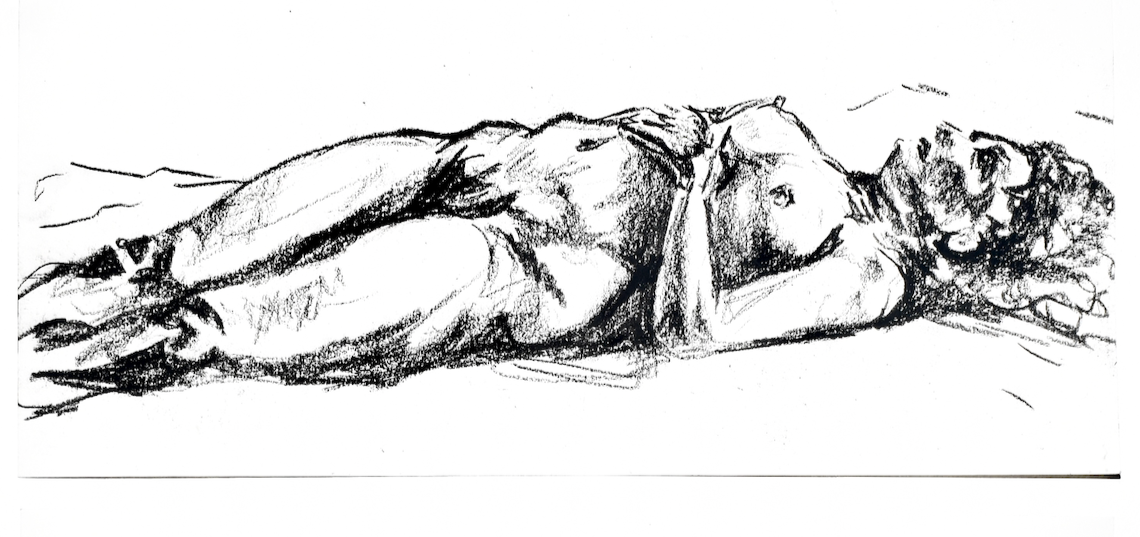
Life drawing, charcoal (A), By GHK, Dec, 2026
Parasocial relationships are often reduced to a symptom of celebrity culture: asymmetrical attachments whereby intimacy is felt without reciprocity. Bonds are formed with people who are unaware of our existence. Society’s attachment to fictional characters, celebrities and online figures is less about obsession than absence. These relationships are pervasive not because we are delusional, but because something fundamental is dissipating in everyday social life. In a world where relationships increasingly feel like labour, a one-way connection offers a rare form of rest.
In an era marked by precarious work, constant mobility and instability, long-term, low-stakes relationships have become increasingly rare. Communities are transient, neighbours change, jobs are temporary and collective identity has weakened. Identity is increasingly constructed through affiliation with individuals rather than groups. The infrastructure that once made relationships effortless has been stripped away. The ‘third places’ that once anchored social life — clubs, community centres, churches, and local cafés — have faded away, become unaffordable, or lost their relevance. What remains demands constant effort and time to sustain. Coordination is required across clashing schedules with housemates or neighbours you rarely see, and friendships are maintained through planned catch-ups because there is no natural rhythm to fall into amid the instability of postmodernity. Parasocial relationships, by contrast, offer continuity on your own terms, without obligation: a familiar voice, face, or narrative that endures as everything else shifts.
These bonds ask little of us, nothing beyond one’s own autonomy. No replies, apologies, availability, negotiation or emotional performance. They offer rest rather than risk, filling the gap left by exhaustion with a favourite influencer or Micheal Scott from The Office (2005-2013). These strange psychological bonds offer accompaniment without the fear of rejection. Hyper-independence has made dependency taboo while making interdependence harder than ever to maintain. There is a quiet shame in admitting you need others but cannot afford the upkeep. Parasocial intimacy provides a way to need without asking. It delivers a reassuring sense of connection that softens our isolation.
Moreover, cultural life is increasingly mediated, rather than shared. Parasocial relationships become the most accessible form of connection when time, energy, or stability are scarce. There is no guilt when you disappear for weeks, no expectation that you will drop everything when required, no risk of disappointment. The beauty of real connection lies partly in these demands; however, in a burnt-out society, this is the only form of intimacy that does not add to the workload. These relationships reflect a broader shift from participation to spectatorship. Increasingly, people watch lives from the outside rather than living alongside others, and observation replaces participation. This is far from moral failure, but rather a structural condition. Belonging becomes something consumed rather than practised as celebrities and characters take on symbolic weight, filling the vacuum left behind by declining collective identities.
Yet these bonds reveal a muted optimism. People remain longing for familiarity, continuity, and shared meaning. Parasocial relationships do not replace real connection but signal the difficulty of sustaining it today. Low-maintenance intimacy should not feel like the only sustainable option. Its appeal points beyond the individual, towards a society that has quietly eroded the conditions for reciprocal closeness.
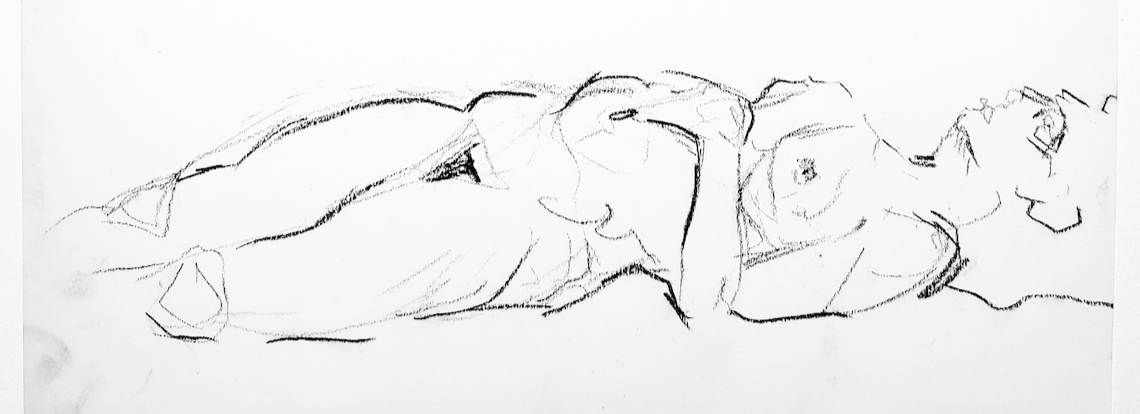
Life drawing, charcoal (B), By GHK, Dec, 2026